Afghan Women Face Unrecognizable Lives Under Five Years of Taliban Rule
Afghan women describe public floggings, job losses, and healthcare barriers after five years under Taliban rule. Hear their stories of survival and hardship.
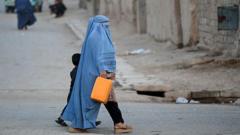
Afghan Women Living Through Unprecedented Hardship Under Taliban Governance
Afghan women Taliban rule has fundamentally transformed daily existence for millions across the nation, with accounts emerging of systematic restrictions that have rendered lives nearly unrecognizable compared to the previous two decades. Since the Taliban's return to power five years ago, women have experienced dramatic changes affecting every aspect of their existence, from employment opportunities to access to essential healthcare services.
Documentation of Severe Public Punishments
Reports indicate that public floggings have become a visible manifestation of the Taliban's interpretation of law and order. Women throughout Afghanistan describe witnessing and experiencing corporal punishment administered in public spaces, creating an atmosphere of fear and compliance. These punishments, often carried out for violations of strict dress codes or perceived infractions against Taliban regulations, serve as stark reminders of the enforcement mechanisms underlying Taliban governance.
Systematic Removal from Workforce
One of the most devastating impacts on Afghan women has been systematic exclusion from employment. Women who previously held positions in government, education, healthcare, and private sectors have found themselves forcibly removed from their jobs. The economic consequences extend beyond individual households; the loss of women's income has pushed numerous families into poverty and created cascading social problems throughout communities that depended on women's earnings.
Healthcare Access as Life-Threatening Crisis
The barriers to healthcare represent perhaps the most dangerous consequence of Taliban rule for women. Medical facilities face restrictions on female patients receiving treatment from male doctors, while simultaneously lacking sufficient female medical professionals. This creates impossible situations where pregnant women cannot access prenatal care or emergency obstetric services. Women's health conditions go untreated due to restrictions on seeking medical attention, contributing to increased maternal mortality rates and preventable medical emergencies.
Educational Opportunities Eliminated
Education, which had expanded significantly for girls in the previous two decades, has been systematically curtailed. Secondary schools for girls remain closed, denying millions of young women the opportunity to continue their studies. Universities have implemented gender segregation policies and restricted women's access to certain fields of study, eliminating pathways to professional development and economic independence.
Social Restrictions and Movement Limitations
Beyond formal restrictions, Afghan women describe suffocating social environments where their freedom of movement has been severely constrained. Requirements for male guardianship when traveling, restrictions on where women can go unaccompanied, and strict dress codes create layers of control that extend into private and public spheres. These restrictions vary by region but consistently limit women's autonomy and independence across the country.
Psychological and Mental Health Impact
The cumulative effect of these restrictions has created profound psychological distress among Afghan women. Depression, anxiety, and trauma-related conditions have become widespread as women cope with loss of opportunity, autonomy, and basic human rights. The prospect of a future under current Taliban policies has created pervasive hopelessness among many women who previously had career aspirations and educational goals.
International Response and Humanitarian Concerns
The situation facing Afghan women has drawn international attention and concern from human rights organizations, the United Nations, and numerous governments worldwide. These entities have documented the restrictions and called for protection of women's rights, though enforcement mechanisms remain limited. Humanitarian organizations operating in Afghanistan face their own restrictions when attempting to provide services to women.
Stories of Resilience Amid Adversity
Despite the oppressive circumstances, Afghan women continue demonstrating remarkable resilience. Some have found ways to continue education through underground schools, others have maintained informal employment while complying with restrictions, and many continue advocating for their rights through underground networks and international communication channels. These stories of perseverance highlight the strength of women determined to maintain their dignity and agency despite systematic attempts to erase their presence from public life.
Long-term Implications for Afghan Society
The exclusion of women from participation in society has broader implications for Afghanistan's development, economy, and stability. When half the population is systematically excluded from education, employment, and public participation, entire sectors suffer from reduced productivity and innovation. Families lose income sources, children lose access to female teachers and healthcare providers, and society loses the contributions of educated, capable women who previously drove social progress.
The situation affecting Afghan women under Taliban rule represents one of the most significant human rights crises of the contemporary world, with consequences that will likely extend far beyond the immediate period of Taliban governance.


