Defending Feral Children: Why Kids Need Freedom
Explore why allowing children independence matters. Discover how island communities raise confident kids through freedom and natural exploration.
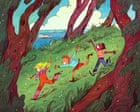
The Paradox of Childhood Independence
Adults frequently voice concerns about feral children not engaging sufficiently with their surroundings and communities. Yet paradoxically, when young people do venture out and claim their rightful place in the world, society immediately demands their silence and compliance. This contradiction reveals a fundamental tension in how modern culture approaches childhood development and youth autonomy.
The concept of feral children—those given greater freedom to explore, play, and develop independently—challenges conventional parenting wisdom. Rather than viewing unsupervised exploration as negligent, growing evidence suggests that allowing children to navigate their environment naturally builds resilience, confidence, and genuine social skills that structured activities cannot replicate.
Growing Up on Peaks Island: A Natural Classroom
On the remote Maine island where many families make their permanent residence, childhood experiences differ dramatically from mainland counterparts. Peaks Island, situated approximately three miles from Portland's coastline and accessible exclusively by water transport, operates as a close-knit community where children develop through direct environmental engagement rather than programmed activities.
The island maintains an elementary school serving younger students, but the absence of secondary education facilities marks a significant milestone. When island children advance to sixth grade, they transition into daily ferry commutes to mainland educational institutions. This journey represents far more than simple transportation—it constitutes a genuine rite of passage that shapes their understanding of independence and community responsibility.
The Ferry Commute as Coming-of-Age Experience
The 7:15 AM ferry departure fundamentally transforms how island youth perceive adulthood. This early morning ritual strips away parental supervision, requiring young people to manage their schedules, navigate ferry procedures, and handle unexpected complications independently. Unlike mainland children shuttled by parents to school, island students assume genuine responsibility for their daily logistics.
This maritime transition creates natural opportunities for character development. Students learn time management, interpersonal skills through ferry interactions, and self-reliance through problem-solving. Weather delays, mechanical issues, and social dynamics aboard the vessel provide real-world education that classroom instruction cannot offer.
Redefining What Feral Childhood Means
The term 'feral children' carries negative connotations in contemporary discourse, yet the reality encompasses something far more valuable. Rather than describing neglected or abandoned youth, it more accurately characterizes children granted appropriate autonomy within their developmental stages. These young people explore their natural surroundings, develop friendships through unstructured play, and build problem-solving capabilities through genuine challenge rather than simulated educational scenarios.
Island communities exemplify this model naturally. Children play outdoors extensively, traverse terrain independently, and participate meaningfully in community life. They engage with weather patterns, tidal cycles, and seasonal changes directly—educational experiences that transcend classroom walls and textbook illustrations.
The Balance Between Freedom and Safety
Granting children appropriate independence does not imply abandonment or negligence. Island parenting demonstrates how genuine safety and meaningful freedom coexist. Adults remain involved and aware while permitting young people sufficient autonomy to develop authentic capabilities and confidence. This balanced approach contrasts sharply with helicopter parenting models that prioritize constant supervision over developmental opportunity.
Feral children thrive within communities where expectations remain clear, consequences remain consistent, and adult guidance remains available without hovering. Island settings naturally facilitate this equilibrium through compact geography and social accountability inherent in small communities.
The Contradiction Adults Must Acknowledge
The fundamental contradiction persists: adults simultaneously demand that children occupy meaningful space within society while simultaneously punishing any noise, disruption, or assertiveness that genuine participation requires. This impossibility forces young people into artificial compliance rather than authentic engagement.
Communities that embrace feral children philosophies—permitting them genuine participation in community life—report youth with stronger self-concepts, better decision-making capabilities, and deeper community connections. When children experience real responsibility and authentic stakes in their actions, they develop genuine maturity that compliant behavior cannot produce.
Conclusion: Rethinking Childhood Freedom
The defense of feral children ultimately represents a defense of authentic childhood development. Rather than viewing unsupervised exploration as failure, reconsidering these experiences as essential developmental components makes substantial sense. Island communities like Peaks Island demonstrate that childhood autonomy, when appropriately balanced with adult guidance and community accountability, produces young people prepared for genuine adulthood. The question society must address is not whether to permit feral children, but rather why we have constructed childhoods that prevent such essential development.