Drumcree Court Decision Sparks Sectarian Tensions in Northern Ireland
High court overturns Orange Order march restrictions on Garvaghy Road, reigniting political disputes in Northern Ireland after two decades of relative peace.
Court Ruling Overturns Orange Order March Restrictions
A significant judicial decision has reignited concerns regarding Drumcree sectarian confrontation in Northern Ireland, as the high court has quashed the latest restrictions imposed on the Orange Order's annual procession. The ruling has immediately sparked renewed political debate surrounding the controversial Garvaghy Road marching route, reviving tensions that many believed had been permanently resolved decades ago.
The court's intervention marks a dramatic turning point in what observers had hoped was a settled matter. Legal authorities determined that the previously established limitations on the Orange Order's parade were no longer legally defensible, effectively clearing the path for the organization to proceed with its traditional march along the disputed route.
Historical Context of Drumcree Tensions
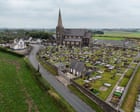
The Drumcree sectarian confrontation represents one of Northern Ireland's most persistent and emotionally charged disputes. For years, the parish church situated near Portadown in County Armagh became the epicenter of extraordinarily tense standoffs that dominated the region's summer months. The annual processions were frequently accompanied by significant confrontations between Orange Order members and police forces deployed to manage the situation.
During the most intense periods, these marching season conflicts extended far beyond the immediate area of contention. Murderous sectarian violence rippled across the entire region, creating cycles of retaliation and counter-retaliation that claimed lives and deepened communal divisions. Families were separated by allegiance, neighborhoods became battlegrounds, and ordinary citizens lived in fear of escalation during the traditional marching season.
Two Decades of Relative Stability
Approximately two decades ago, the seemingly intractable Drumcree sectarian confrontation gradually began to diminish in intensity. Rather than approaching each summer with dread, communities found that pitched battles between Orangemen and police forces became increasingly rare. The murderous sectarian violence that had characterized previous decades subsided substantially.
This transformation represented a genuine breakthrough for Northern Ireland's communities. A de facto truce emerged, not through formal agreements necessarily, but through patterns of behavior and mutual restraint that gradually became established. The Drumcree dispute, which had seemed destined to perpetually haunt the region, faded into what many hoped was merely historical record.
Political Ramifications of the Recent Ruling
The recent high court decision threatens to unravel this hard-won stability. Political representatives from various backgrounds have expressed alarm at the potential consequences of allowing the Orange Order march to proceed without established safeguards. Those concerned argue that removing the Garvaghy Road restrictions eliminates protective measures that were carefully constructed to minimize the risk of sectarian confrontation.
Community leaders, particularly those representing nationalist interests, fear that the Drumcree sectarian confrontation could resurface with renewed intensity. They contend that the restrictions served an essential function in maintaining the delicate equilibrium that had protected civilians from violence during sensitive periods.
Orange Order Perspective and Marching Rights
Conversely, Orange Order representatives maintain that their right to march along traditional routes represents a fundamental expression of cultural identity and religious freedom. They argue that restrictions amount to discrimination against their community and that court decisions should recognize their entitlement to parade along historically significant paths without governmental or judicial impediment.
The organization has consistently challenged restrictions on the Garvaghy Road route, viewing them as discriminatory measures that infringe upon their established traditions. From their perspective, the court ruling represents a vindication of their legal rights and cultural prerogatives.
Broader Implications for Community Relations
The resurrection of Drumcree sectarian confrontation concerns extends beyond the immediate legal or procedural dimensions. Northern Ireland's communities have invested significant emotional and social capital in maintaining the peace frameworks that emerged during the past two decades. The prospect of renewed tensions threatens the broader stability that residents have worked to establish.
Local authorities, police forces, and community organizations now face the challenge of managing potential escalation while respecting diverse perspectives. The Garvaghy Road dispute exemplifies the persistent complexities that characterize post-conflict societies, where historical grievances, cultural rights, and security concerns intersect in challenging ways.
Path Forward Amid Uncertainty
As the implications of the court decision continue to unfold, stakeholders across Northern Ireland's political spectrum are evaluating potential responses. Some advocate for legislative action to reinstate protections, while others suggest dialogue-based approaches to address underlying concerns. The coming months will prove crucial in determining whether the Drumcree sectarian confrontation resurfaces as a destabilizing force or whether communities can identify alternative frameworks for managing the sensitive issue.
The ruling demonstrates that resolving deeply rooted disputes requires ongoing attention and commitment from all involved parties. What appeared to be a settled matter has been reopened, serving as a sobering reminder that historical tensions can resurface when legal or procedural mechanisms change unexpectedly.