Helium-3: The Lunar Resource That Could Power Our Future
Discover helium-3 sources and moon mining prospects. Learn why this rare isotope is valuable and how lunar extraction could revolutionize clean energy worldwide...
Understanding Helium-3 and Its Growing Importance
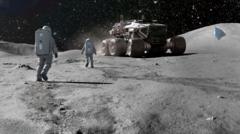
Helium-3 represents one of the most sought-after isotopes in the modern energy landscape, with extensive research pointing toward helium-3 moon mining as a potential solution to future energy demands. This rare isotope, distinct from common helium-4, possesses unique nuclear properties that make it invaluable for advanced technological applications and potential fusion energy generation.
The significance of helium-3 extends beyond mere scientific curiosity. Its scarcity on Earth combined with increasing global energy requirements has sparked intense interest in alternative sourcing methods. Scientists and energy experts worldwide recognize that helium-3 could fundamentally transform how we approach clean energy production in the coming decades.
Current Helium-3 Production and Market Challenges
Present helium-3 supplies remain severely limited, with extraction primarily occurring as a byproduct from nuclear weapons dismantling programs and specialized research facilities. The current global helium-3 production fails to meet projected demand, creating a significant supply-demand imbalance that continues to widen each year.
Market prices for helium-3 reflect its scarcity dramatically. A single liter of helium-3 can cost thousands of dollars, making it accessible only to well-funded research institutions, government agencies, and advanced technology companies. This economic barrier has intensified exploration into alternative acquisition strategies.
Why the Moon Contains Helium-3
The lunar surface harbors substantial concentrations of helium-3 that accumulated over billions of years through solar wind deposition. Unlike Earth's atmosphere, which provides minimal natural protection from cosmic radiation, the moon's regolith accumulated helium-3 particles without significant atmospheric interference. Scientific analysis estimates that lunar soil contains approximately 1.1 million metric tons of helium-3, representing sufficient quantities to address global energy requirements for centuries.
This remarkable concentration results from the moon's geographical position and atmospheric composition. The solar wind continuously deposits helium-3 particles onto the lunar surface, where they become embedded in the regolith without degradation. Researchers have documented these deposits through lunar sample analysis and orbital observations.
Lunar Mining Technology and Feasibility
Extracting helium-3 from lunar regolith presents substantial technical challenges that space agencies and private companies are actively addressing. The extraction process requires heating lunar soil to extremely high temperatures, causing helium-3 to separate from rock materials. Subsequent collection and purification procedures demand sophisticated equipment designed specifically for lunar environmental conditions.
Current technological proposals suggest establishing permanent lunar mining facilities equipped with automated systems capable of processing massive quantities of regolith. These facilities would need to operate independently for extended periods while generating electricity and managing extreme temperature variations ranging from -170 to 130 degrees Celsius.
Equipment and Infrastructure Requirements
Successful helium-3 extraction demands substantial infrastructure investments. Mining operations would require drilling systems, heating apparatus, collection chambers, and processing units specifically engineered for lunar conditions. Transportation systems capable of delivering extracted helium-3 from the moon to Earth-based facilities or orbital platforms represent another significant technological requirement.
Advanced robotics and artificial intelligence systems would manage mining operations remotely, reducing human exposure to hazardous conditions while maintaining operational efficiency. Power generation systems utilizing solar panels or nuclear reactors would provide necessary energy for continuous mining activities.
Energy Applications and Fusion Potential
The primary appeal of helium-3 centers on its exceptional properties for thermonuclear fusion reactions. Unlike deuterium-tritium fusion, helium-3 fusion processes produce fewer neutrons and radioactive byproducts, potentially creating significantly cleaner nuclear fusion energy. This characteristic positions helium-3 as an ideal fuel for next-generation fusion reactors currently under development worldwide.
Fusion reactions utilizing helium-3 would generate enormous energy quantities while producing minimal radioactive waste compared to conventional fission reactors. Such advancements could fundamentally reshape global energy infrastructure, reducing dependence on fossil fuels and addressing climate change concerns comprehensively.
Current Research and Development Initiatives
Multiple space agencies and private enterprises have initiated programs investigating helium-3 extraction feasibility. Government-funded research institutions across North America, Europe, and Asia continue developing technologies and methodologies applicable to lunar mining operations. These initiatives represent preliminary steps toward establishing commercial-scale extraction operations.
Private aerospace companies have begun incorporating lunar resource extraction into long-term business strategies. Collaborations between governmental agencies and commercial entities accelerate technological development while distributing research costs across multiple organizations.
Economic and Geopolitical Considerations
Successfully implementing helium-3 moon mining would create substantial economic opportunities for nations and companies leading technological development. The potential market value for lunar-extracted helium-3 could reach billions of dollars annually, attracting significant international investment and competition.
International space law frameworks, particularly the Outer Space Treaty, establish guidelines for lunar resource extraction while addressing sovereignty concerns. Future regulatory mechanisms will likely determine extraction rights, environmental protection standards, and profit-sharing arrangements.
Timeline and Future Prospects
Experts project that viable helium-3 extraction operations could begin within 20-30 years, pending continued technological advancement and funding availability. Initial operations would likely establish small-scale mining facilities to refine extraction techniques before expanding to large-scale commercial production.
The convergence of advancing space technology, increasing energy demands, and international cooperation suggests that lunar helium-3 mining represents an achievable goal rather than distant fantasy. Strategic investments and coordinated research efforts will determine whether this promising energy source becomes reality.


