Nepal-Tibet Floods Leave Hundreds Dead: What We Know
Devastating floods and landslides strike Nepal-Tibet border, leaving hundreds dead or missing. Latest updates on the catastrophic disaster and rescue efforts.
Nepal-Tibet Floods: A Catastrophic Crisis Unfolds
A devastating environmental catastrophe has struck the mountainous regions bordering Nepal and Tibet, with Nepal-Tibet floods causing widespread destruction and claiming numerous lives. The disaster, which occurred on Wednesday, has left hundreds of individuals either dead or unaccounted for, making it one of the region's most severe natural calamities in recent years. As rescue teams mobilize across the affected areas, authorities continue to assess the full extent of the damage and work tirelessly to locate missing persons.
Scale of the Disaster
The exact number of fatalities remains fluid as recovery operations continue across multiple locations along the Nepal-Tibet border. Initial reports indicate that the Nepal-Tibet floods have impacted numerous villages and settlements, with entire communities cut off from immediate assistance. The combination of torrential rainfall, overflowing rivers, and unstable geological conditions created perfect circumstances for this humanitarian emergency. Regional officials describe the situation as critical, with many remote communities still unable to receive help or confirm their status.
Landslides Compound the Crisis
Beyond the flooding itself, massive landslides have proven equally devastating to the affected populations. These geological events have blocked major transportation routes, destroyed homes, and buried agricultural lands that sustain local economies. The steep terrain characteristic of the Nepal-Tibet border region amplifies the danger, as saturated soil becomes increasingly unstable. Landslides have not only claimed lives directly but have also isolated survivors, preventing rescue teams from reaching affected areas and delivering emergency supplies. The cascading nature of these disasters—where floods trigger landslides, which then obstruct rescue efforts—has created an extraordinarily complex emergency response scenario.
Ongoing Search and Rescue Operations
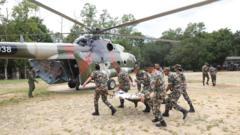
Emergency services from both Nepal and the Tibet Autonomous Region have launched coordinated rescue efforts to locate survivors and provide medical assistance to the injured. Rescue teams are working in extremely challenging conditions, navigating damaged infrastructure, hazardous weather patterns, and difficult mountainous terrain. Helicopter operations have begun in certain accessible areas, while ground teams push through damaged routes to reach isolated settlements. The slow progress of rescue efforts reflects both the scale of destruction and the geographical obstacles inherent to the region. International aid organizations have signaled their readiness to provide support as coordination with local authorities improves.
Displacement and Humanitarian Concerns
Thousands of residents have been displaced from their homes, facing immediate threats to their health and safety. With water supplies potentially contaminated, food becoming scarce, and shelter destroyed, survivors face acute humanitarian challenges. The monsoon season in this region typically brings heavy precipitation, but the intensity and timing of Wednesday's weather created unexpected conditions that overwhelmed local infrastructure and drainage systems. Temporary shelters are being established in safer locations, though their capacity remains limited. Health authorities warn of potential disease outbreaks given the unsanitary conditions and large concentrations of displaced persons.
Infrastructure Damage Assessment
Roads, bridges, and vital communication networks have sustained severe damage from the flooding and associated landslides. This infrastructure destruction directly hampers relief and rescue operations, creating a vicious cycle where damaged routes prevent delivery of aid to those who need it most. Preliminary assessments suggest that rebuilding critical infrastructure will require months or years of intensive effort and substantial financial investment. Several bridges that connected isolated communities to major towns have been completely washed away, effectively cutting off access to those regions.
Climate and Geographical Factors
The Nepal-Tibet border region's unique geographical characteristics make it particularly vulnerable to natural disasters of this magnitude. High elevations, steep slopes, and seasonal weather patterns all contribute to the area's susceptibility to flooding and landslides. Climate scientists note that changing precipitation patterns and extreme weather events have become increasingly common in the Himalayan region in recent decades. The combination of natural factors and environmental changes has created conditions where catastrophic events like this flooding disaster may become more frequent in the future.
Regional Response and International Support
Both Nepal and Chinese authorities have declared the situation a major disaster, enabling faster mobilization of resources and streamlined decision-making processes. International diplomatic channels have opened to facilitate cross-border cooperation, as the disaster affects populations on both sides of the border region. Countries with expertise in mountain rescue operations have offered their assistance, recognizing the specialized skills required for effective emergency response in such terrain. The international community's response reflects growing recognition of shared vulnerabilities in the face of large-scale natural disasters that transcend political boundaries.


