Technology's Role in Wildfire Detection and Prevention
Discover how advanced technology is transforming wildfire monitoring and detection systems while firefighters remain essential for containment and suppression e...
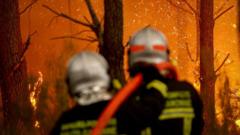
Technology's Growing Impact on Wildfire Detection
Wildfire technology has become increasingly important in early detection and prevention strategies across fire management agencies. While advanced systems and innovative tools play a crucial role in identifying potential threats, the reality remains clear: firefighters are indispensable when it comes to actual fire suppression and ground operations. Understanding the relationship between these technological advances and human expertise reveals how modern wildfire management combines the best of both approaches.
The integration of cutting-edge monitoring solutions has significantly improved response times and situational awareness. Satellite imagery, thermal cameras, and AI-powered detection systems continuously scan vast forest areas, providing real-time data that helps anticipate dangerous conditions. These technological innovations represent a fundamental shift in how authorities approach wildfire prevention and early intervention.
Surveillance Systems and Monitoring Networks
Modern wildfire detection systems employ multiple layers of technology to identify fires at their earliest stages. Automated camera networks positioned throughout high-risk regions capture visual data 24/7, while machine learning algorithms analyze this information to detect smoke, flames, or environmental changes that precede fire ignition.
Satellite technology contributes another critical layer, offering broad geographic coverage that ground-based systems cannot match. These orbital platforms detect thermal signatures and infrared anomalies indicative of developing fire situations, enabling agencies to alert personnel before ground conditions become critical.
The Irreplaceable Role of Firefighters
Despite impressive technological capabilities, firefighters remain absolutely essential to wildfire management. No technology can replace the tactical decision-making, physical intervention, and adaptive problem-solving that experienced firefighters provide when facing active blazes.
Ground crews assess complex terrain, weather conditions, and fire behavior in real-time, making split-second decisions that machines cannot replicate. Firefighters execute controlled burns, create firebreaks, deploy water and fire retardant, and manage evacuation efforts—tasks requiring human judgment, physical capability, and situational awareness that current technology cannot fully automate.
AI and Predictive Analytics in Fire Prevention
Artificial intelligence applications extend wildfire technology beyond simple detection into predictive territory. Machine learning models analyze historical fire data, weather patterns, vegetation conditions, and seasonal trends to forecast high-risk periods and vulnerable areas.
These predictive systems allow resource allocation to occur strategically before fire season peaks. By identifying where firefighters and equipment should be positioned, wildfire technology enhances operational efficiency and response capability. However, execution still depends entirely on trained personnel working in dangerous conditions.
Drones and Aerial Support Systems
Unmanned aerial vehicles have become valuable additions to wildfire management arsenals. Drones equipped with thermal imaging and advanced sensors provide firefighters with critical information about fire extent, structure threats, and optimal attack routes.
These aerial platforms can navigate through smoke and reach dangerous altitudes that human pilots cannot safely achieve. They support tactical planning by delivering real-time situational intelligence to incident commanders, helping firefighters make informed decisions about resource deployment and evacuation protocols.
The Complementary Relationship: Technology and Human Expertise
The future of wildfire management clearly lies not in replacing firefighters with technology, but rather in augmenting human capabilities with sophisticated tools. Wildfire technology serves as a force multiplier, enhancing what firefighters can accomplish through better information and strategic positioning.
This integrated approach addresses the fundamental limitations of each component. Technology excels at continuous monitoring, data analysis, and pattern recognition across vast territories. Firefighters excel at executing complex tactical operations, adapting to unpredictable conditions, and protecting human life and property.
Investment in Dual Capabilities
Progressive fire management agencies invest in both technological infrastructure and firefighter recruitment and training. This dual commitment reflects understanding that comprehensive wildfire response requires sophisticated detection systems paired with robust human resources.
Communities and regions that have embraced this balanced approach demonstrate better outcomes in terms of early detection, rapid response, and successful containment. The combination of advanced monitoring networks and well-equipped firefighting teams creates resilient systems capable of handling increasingly severe fire conditions.
Future Developments in Wildfire Management
Emerging technologies continue evolving wildfire response capabilities. Advanced weather prediction models, real-time air quality monitoring, and sophisticated resource management systems all contribute to the technological ecosystem supporting firefighters.
As these tools become more sophisticated, their value as decision-support systems for human operators increases proportionally. Rather than autonomous fire suppression, the trajectory points toward increasingly intelligent systems that provide firefighters with superior information and analytical support.
The conclusion is unmistakable: wildfire technology will continue advancing, but firefighters will remain the irreplaceable foundation of effective wildfire management. The future belongs to integrated systems where innovation enhances rather than replaces human expertise and dedication.


