Trump Announces Reduction in US Military Exercises with South Korea Following Iran Conflict
Trump scales back US military drills with South Korea citing strong North Korea ties. Learn how this decision impacts regional security and diplomatic relations...
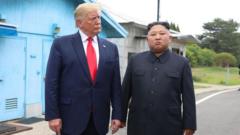
Trump Announces Significant Reduction in US Military Exercises with South Korea
President Donald Trump has declared that the United States will substantially reduce the scope and frequency of its military exercises with South Korea, marking a notable shift in defense policy. This decision regarding US military exercises with South Korea comes as the nation maintained its position of non-engagement during recent Iranian conflict escalations, prompting the administration to reassess its strategic military commitments in the Pacific region.
The Rationale Behind the Policy Change
The Trump administration has attributed this significant reduction in joint US military exercises with South Korea to the president's conviction that maintaining strong diplomatic channels with North Korean leadership remains essential for long-term regional stability. Trump emphasized his "very good relationship" with North Korea's leader as the primary factor influencing this military strategy adjustment, suggesting that scaled-back exercises may demonstrate goodwill and potentially facilitate ongoing negotiations.
The decision reflects the administration's broader diplomatic philosophy, which prioritizes direct engagement and relationship-building with traditionally adversarial nations. By reducing the frequency and scale of US military exercises with South Korea, the Trump administration signals a willingness to adjust defense postures based on diplomatic progress, though the move has generated considerable debate among military strategists and security analysts.
South Korea's Position on Military Drills
South Korea's decision to remain neutral during the Iran conflict complications appears to have influenced Washington's calculations regarding the necessity of maintaining intensive joint military exercises with South Korea. The Korean government has maintained its focus on national interests and regional security concerns, balancing its alliance obligations with practical considerations regarding Middle Eastern entanglements.
Officials from Seoul have indicated their understanding of the administration's perspective, though concerns remain about potential impacts on readiness and deterrence capabilities against North Korean provocations. The reduction of US military exercises with South Korea represents a delicate negotiation between alliance commitments and the pursuit of diplomatic solutions to regional tensions.
Implications for Regional Security and Defense Strategy
The scaling back of joint military exercises carries substantial implications for the broader security architecture in Northeast Asia. These exercises have traditionally served as important mechanisms for maintaining military interoperability, testing defense systems, and demonstrating commitment to the alliance. Reducing their frequency may impact coordination capabilities and could potentially signal shifting strategic priorities to neighboring nations, particularly China and Russia.
Military experts have expressed concern that fewer US military exercises with South Korea could diminish the deterrent effect against North Korean military adventurism. The exercises serve multiple purposes: they enhance tactical readiness, test new defense technologies, and project stability in a region where military capabilities are scrutinized closely by all parties. The administration contends that diplomatic engagement offers alternative pathways to achieve security objectives.
Trump's Diplomatic Approach to North Korea
The Trump administration's approach to North Korea has consistently emphasized the value of direct presidential engagement and personal relationships between leaders. The president's assertion of his "very good relationship" with North Korean leadership underscores his conviction that traditional deterrence strategies require supplementation with innovative diplomatic approaches. This philosophy extends to defense policies, including decisions about the scale of military exercises conducted with allied nations.
The administration believes that demonstrating flexibility in military posturing, such as reducing US military exercises with South Korea, may create space for meaningful negotiations regarding nuclear weapons development and missile programs. This strategy represents a departure from decades of defense policy that prioritized forward deployment and regular large-scale exercises as cornerstones of regional deterrence.
Looking Forward: Future Developments
The implications of this reduction in US military exercises with South Korea will likely unfold gradually over the coming months and years. Defense planners must now navigate the challenge of maintaining readiness and alliance cohesion while accommodating the administration's diplomatic initiatives. The success of this approach will ultimately depend on whether diplomatic progress with North Korea materializes and whether regional security remains stable despite the reduction in joint military activities.
Both Washington and Seoul will need to coordinate closely to ensure that reduced exercise frequency does not compromise critical defense capabilities or send unintended signals to regional actors. The coming period will reveal whether Trump's diplomatic strategy yields the desired security outcomes or whether the reduction of US military exercises with South Korea proves strategically disadvantageous for long-term regional stability.


