Artificial Ice Pyramids: How India's Mountain Villages Combat Water Scarcity
Discover how Himalayan communities build artificial glaciers and ice pyramids to secure water supplies for spring crop irrigation. Innovative climate adaptation...
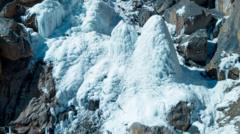
Innovative Water Solutions in the Himalayas
High-altitude communities across India's Himalayan region have developed a groundbreaking approach to address seasonal water shortages through the construction of artificial glaciers. These remarkable ice pyramids represent an ingenious response to the challenges posed by climate change and unpredictable precipitation patterns. The artificial glaciers serve as critical water reserves that sustain agricultural activities throughout the crucial spring season.
Understanding the Artificial Glaciers Concept
The creation of artificial glaciers involves a sophisticated yet sustainable process adapted to mountain terrain. Engineering teams pipe water from natural sources downhill during winter months, allowing it to freeze naturally in the frigid mountain air. This accumulated ice and snow forms pyramid-shaped structures that resemble natural glaciers, creating substantial water reserves for the dry season ahead.
How the System Functions
The process begins by identifying suitable locations at higher elevations where temperatures remain below freezing for extended periods. Water channels direct flow to designated freezing zones, where the natural cold transforms liquid water into ice formations. These structures can accumulate thousands of cubic meters of frozen water, effectively storing precious resources that would otherwise flow away unused during winter months.
Water Security for Agricultural Communities
Mountain villages depend critically on predictable water availability for irrigation and livestock management. Traditional water sources have become increasingly unreliable due to changing climate patterns and glacier retreat. The artificial glaciers provide a dependable alternative that enables farmers to plan cultivation schedules with greater confidence. When spring arrives and temperatures rise, these ice formations gradually melt, releasing water precisely when crops require maximum irrigation support.
Impact on Local Crop Production
Communities implementing artificial glacier systems report significant improvements in agricultural productivity and food security. Spring planting seasons no longer face the uncertainty of insufficient water availability. Farmers can cultivate larger areas and choose crop varieties previously considered too water-intensive for their regions. This expansion directly translates into increased household income and improved nutrition for mountain communities.
Environmental and Sustainability Benefits
Unlike conventional water management infrastructure requiring extensive construction and environmental modification, artificial glaciers work harmoniously with natural systems. The process avoids damming rivers or diverting natural water courses, preserving ecosystem integrity. Additionally, these frozen reserves help mitigate the effects of prolonged droughts and reduce competition for water resources between agricultural and domestic users.
Climate Adaptation Strategy
Climate scientists recognize artificial glacier creation as a legitimate adaptation strategy for high-altitude communities facing environmental change. The approach acknowledges local realities while implementing practical solutions grounded in physics and hydrology. Villages participating in these programs demonstrate resilience and self-sufficiency, reducing dependence on external water management interventions.
Expansion and Future Prospects
Several Himalayan states have recognized the potential of artificial glacier projects and begun scaling implementation across multiple villages. Government agencies provide technical support and initial funding to communities interested in establishing these systems. Success stories from pioneering villages inspire neighboring regions to explore similar approaches. Educational programs train local engineers in construction and maintenance, building institutional knowledge within mountain communities.
Challenges and Ongoing Development
Expanding artificial glacier networks requires careful site selection, adequate funding, and sustained technical expertise. Some regions face geographical limitations that complicate implementation. Maintenance demands attention during critical freezing periods, requiring coordination and community participation. Researchers continue refining techniques to enhance efficiency and extend the lifespan of individual structures.
Global Significance of Mountain Innovation
The artificial glacier initiative demonstrates how indigenous knowledge combined with modern engineering creates effective responses to climate challenges. Other glaciated mountain regions worldwide, from the Andes to Central Asia, observe these projects with interest. The approach provides valuable lessons for communities facing similar water security threats in vulnerable mountain ecosystems.
Community Engagement and Success
The sustainability of artificial glacier programs depends fundamentally on community buy-in and participation. Villages that view these projects as collective assets, rather than external impositions, achieve stronger outcomes. Local governance structures facilitate water distribution agreements and maintenance scheduling. Successful communities share knowledge with neighboring villages, creating networks of adaptation and mutual support across mountain regions.
Himalayan communities continue pioneering solutions that secure water resources while honoring their deep connection to mountain environments. The artificial glaciers stand as monuments to human ingenuity, transforming climate vulnerability into opportunity through patient observation and collaborative problem-solving.


